
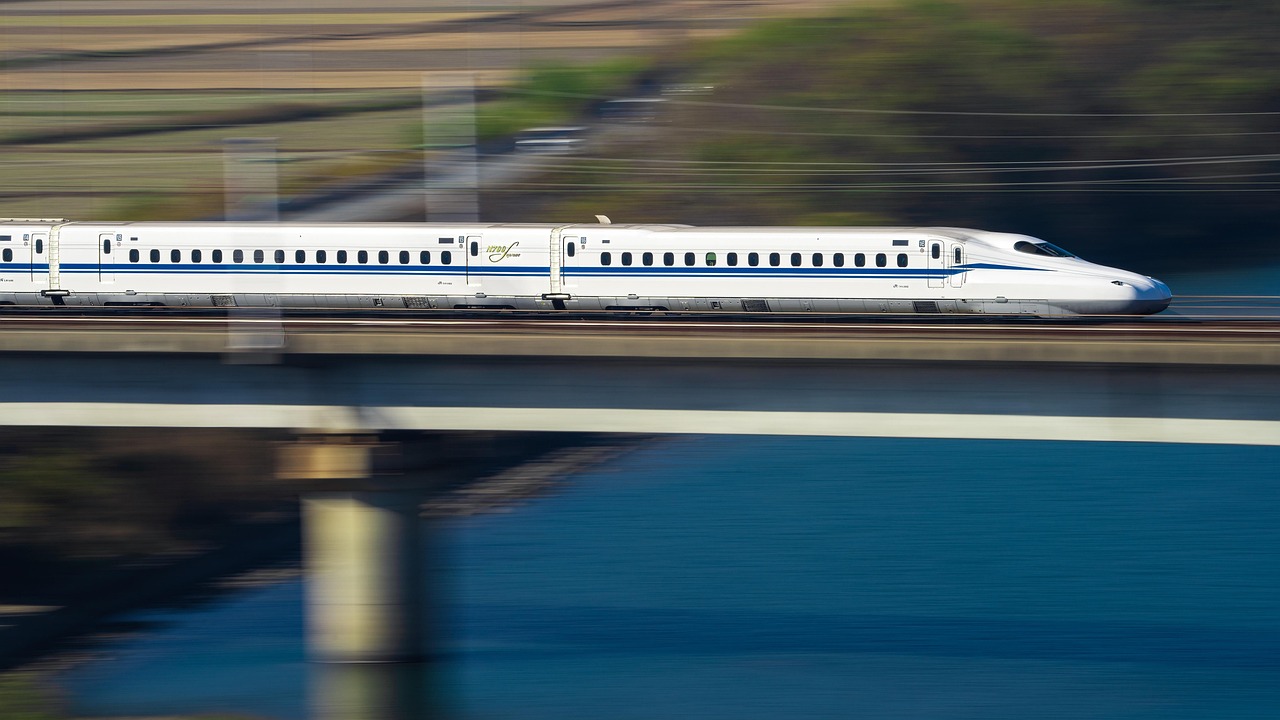
Rail transport is heading toward autonomy, promising increased efficiency, safety and sustainability. Central to this transformation are connectors, which ensure seamless communication between various subsystems. From real-time diagnostics to autonomous navigation, connectors underpin the intelligent infrastructure driving modern rail innovation.
Powered by investments
Rail operators are making significant investments in digitalisation and automation, worldwide. In Germany, Deutsche Bahn is trialling fully automated trains in Hamburg as part of its ‘Digital Rail Germany’ initiative, planning to increase capacity and reduce emissions without expanding the physical infrastructure. Meanwhile, East Japan Railway Company (JR East) is advancing plans to introduce driverless Shinkansen bullet trains by the mid-2030s, starting with a line between Tokyo and Niigata.
All these efforts signal a wider shift toward rail systems built with AI at the heart, with real-time analytics and high-speed communication, all of which depend on reliable interconnect technology.
Connecting complexity
However, the railway environment has some of the most severe conditions for electrical cables and connectors. Rolling stock and trackside hardware are exposed to constant vibration, harsh temperature extremes from -55°C up to +200°C, as well as high humidity. Equally, connectors are also exposed to contaminants like dust, oil and de-icing agents.
Then, there is electromagnetic interference (EMI) generated by traction drives and overhead cables, which can affect signal integrity, unless connectors are effectively shielded.
Connectors designed for rail applications must be ruggedised to meet stringent international standards such as EN 50155 and EN 45545-2, NFPA 130, VG 95234 and MIL-DTL-5015. These benchmarks define the connector’s ability to withstand shock, vibration, fire exposure and long-term environmental stress. RoHS and REACH variations along with corrosion resistant plating make for rugged and reliable connector solutions in the harshest environments.
Autonomous trains bring added demands on the connectors: They must be capable of supporting high-speed data transmission protocols such as Gigabit and 10-Gigabit Ethernet (typically Cat 6A and Cat 7), USB 3.1 and fibre optic interfaces.
All these protocols are essential for handling real-time data streams from sensors, LiDAR systems, onboard diagnostics and communication networks. Data rates in these environments can exceed 10Gbps, especially when multiple high-bandwidth systems, such as video surveillance, telemetry and predictive maintenance sensors are operating concurrently.
We mustn’t forget the mechanical aspect of connectors, where resilience remains critical. Connectors generally incorporate bayonet or threaded coupling systems to maintain secure connections under vibration. Contact retention mechanisms are designed for longevity, often rated for thousands of mating cycles. Contacts are generally gold-plated to minimise corrosion and offer low contact resistance for a prolonged time. These are also available in silver-plated versions.
Then, there is ease of maintenance as another crucial factor, particularly for retrofit applications. Modular connector designs and coding schemes enable simple installation and error-proofing. In addition, quick-disconnect configurations ensure quick field servicing with minimal downtime.
Future-proofing rail connectivity
As Rail 4.0 evolves, so too must the technology that supports it. Upcoming innovations in train autonomy and electrification demand connectors with greater bandwidth, higher power ratings and smarter integration capabilities.
For example, the development of distributed traction systems and battery-electric multiple units (BEMUs) introduces new requirements for high-voltage, high-current connectors that can handle regenerative braking energy and rapid charging. These connectors must include safety interlocks, arc suppression features and compliance with standards such as IEC 61373 for shock and vibration.
Simultaneously, increased deployment of real-time diagnostics and condition monitoring means that connectors must support multiple sensor interfaces. Emerging designs now incorporate built-in diagnostics, enabling connectors themselves to report on temperature, contact resistance, or mechanical wear, turning passive components into intelligent assets.
Modularity is another key trend. Future rail systems will demand flexible, reconfigurable architectures to accommodate upgrades and regional customisations. Connectors that support daisy-chaining, backplane mounting and tool-less assembly are increasingly favoured to reduce downtime and simplify system expansion.
PEI-Genesis supplies a wide range of connectors engineered specifically for challenging rail environments. The portfolio includes high-power solutions designed to handle demanding electrical loads, as well as high-speed data connectors used in communications and control systems. These connectors are designed to meet strict global rail standards, including EN 50155. With modularity and rugged design as core principles, our connectors support applications ranging from onboard control systems to trackside signal units, playing an essential role in powering the next generation of autonomous rail technology.
Connectors remain vital
As the global rail industry accelerates towards full automation, the supporting technologies behind the scenes are just as vital as the software that guides the trains. Connectors play a crucial role in delivering the reliability, safety and performance required by Rail 4.0. They serve as the nervous system of modern trains, making real-time communication and electrified propulsion possible in even the harshest environments. Looking ahead, the connector landscape will continue to evolve alongside rail innovation, offering smarter, faster and more resilient solutions that keep the railways of the future on track.
By Karen James, Product Manager, PEI-Genesis